


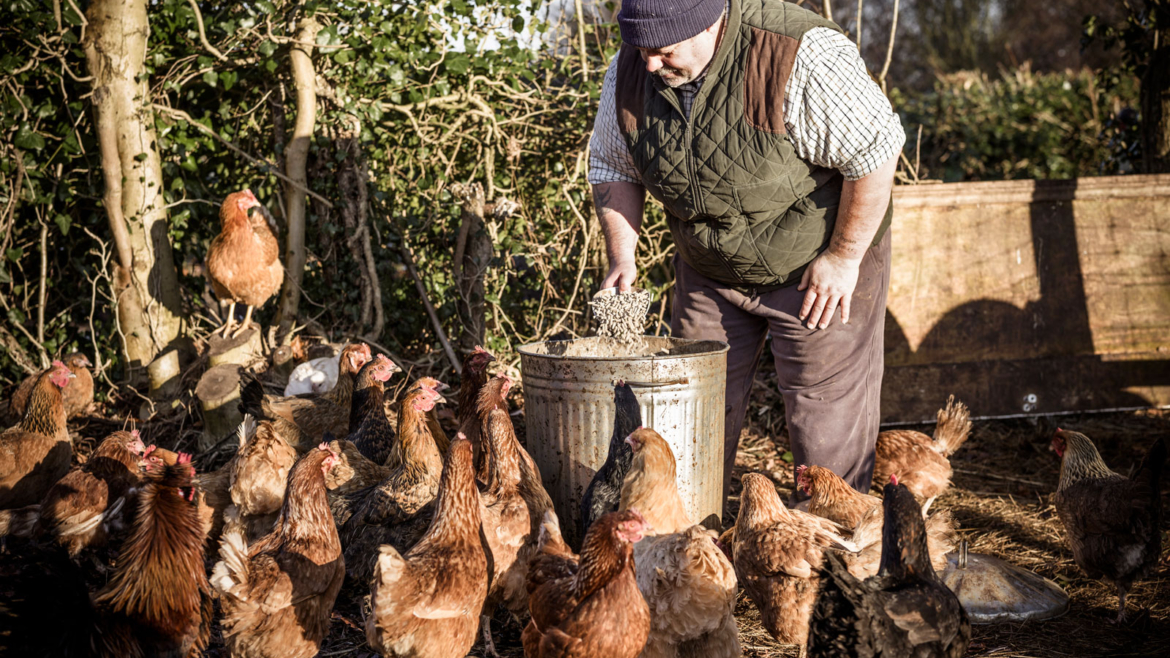
Poultry farming in Greece is one of the most dynamic sectors of the agricultural economy and currently represents about 5% of the total value of agricultural production. Although the problems - mainly of an economic nature - are not lacking, the prospects of the industry can prove to be significant. If, in fact, the producers and the companies of the sector are supported by the state - both in the field of production and the reduction of the cost of inputs and in the field of extroversion - then the growth will be more than certain.
KAZAKOS D. & G. OE
POULTRY
Epirus holds the "scepters" of domestic chicken production, with 45%, followed by Central Greece, with 27%, followed by Macedonia and Thrace, with a share in production of 18%. The annual chicken production in our country amounts to at about 200,000 tons. In recent years, the self-sufficiency rate has decreased and reaches 75%, when in 2010 the Greek self-sufficiency in poultry meat exceeded 82%. At the same time, there is an increase in imports, which annually amount to 80,000 tons of chicken. The size of poultry farms ranges from 10,000 to 40,000 chickens, with the average breeding reaching about 20,000 chickens.
Greek chickens are either marketed in bulk or packaged with the veterinary address of their slaughterhouse and their date of production. The imported chickens and their parts are intended for Laboratories, catering, catering and other markets where they are sliced, boned, processed and marketed as Greek, e.g. round, skewers, fillet, rolls, ready baked and many other preparations.
The diet of birds is based on the administration of a mixture, which contains cereals, soy flour, sunflower flour, bran, vegetable oils, minerals (marble dust, phosphates), vitamins, trace elements, amino acids, etc. The composition of the feed should be balanced and in accordance with the needs of the birds in nutrients depending on their age and stage of development. Each hybrid is accompanied by a breeding guide which, in addition to its productive characteristics, also mentions its nutrient requirements by age.
The mixture administered to the birds can be supplied by the interested party from the feed production companies either in full or as a concentrate, which will "dilute" with the required amount of cereals, soy, etc. It can also supply the required raw materials separately and produce it on its own. In the last two cases, it must comply with the provisions of Regulation (EC) 183/2005 regarding the hygiene of animal feed and JM 340668/2008 Government Gazette 2422 / Β / 2008, as well as has received the required registration code or approval by the Department of Agricultural Economy & Veterinary Medicine.
During the breeding of chickens, the breeder, in addition, should pay special attention to the following:
Livestock quality: Birds should be uniform, lively and vaccinated with the required vaccines from a reputable supplier.
Vaccinations: The necessary vaccinations must be carried out at the appropriate time, in the appropriate manner and frequency. The vaccines used must be stored in accordance with the manufacturer's instructions and the equipment used must be inspected and disinfected.
Nutrition: The feed used should be of good quality from a health point of view and the composition of the feed should be balanced and in accordance with the birds' needs for nutrients.
Breeding conditions: The conditions prevailing in the breeding (lighting, ventilation, humidity) should be those that ensure the optimal development of the genetic characteristics of the birds, according to the breeding guide of the hybrid.
Poultry equipment: The equipment used (feeders, watering cans, fans, lighting system, water cooling systems, etc.) should be sufficient in number, kept clean and operated according to the manufacturer's specifications.
Observance of hygiene measures: All necessary hygiene measures must be observed (rodenticides, disinfection, disinfestations, avoidance of contamination points - stagnant water, etc.) in the area of breeding, food preparation and generally in all areas of the holding.
Daily loss elimination.
Inspections: Both livestock and mechanical equipment should be inspected at regular intervals. In this way, a) food waste due to the improper operation of the feeding system, b) lack of water or leaks due to the improper operation of the poultry feed supply can be avoided and c) infectious diseases can be identified and treated in a timely manner.
Curated by: Eleni Stavrou, Kyriakos Lambrou, Pamphigon and Phytophagous Monogastric, Furry Animals and Other Terrestrial Organisms Department, Department of Animal Genetic Resources Management and Animal Breeding Systems of the Ministry of Agriculture.

